Forestry Mulching
Turn brush, saplings, and unwanted vegetation into mulch that stays on the ground.
Home › Services › Land Clearing
We clear wooded or overgrown ground around the way you plan to use the property next, with a scope built for the actual site.
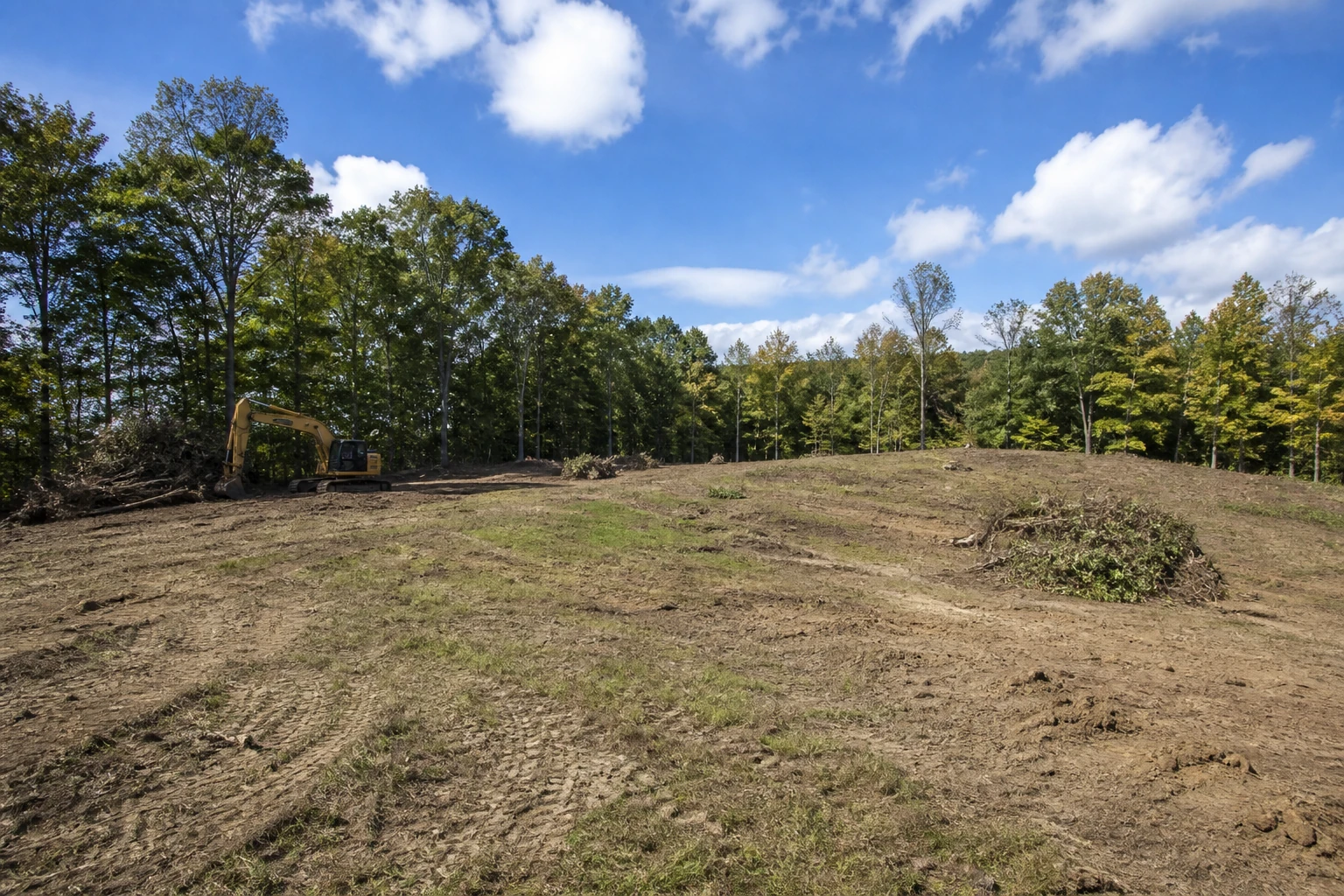
We offer conventional land clearing as a separate service from forestry mulching, and that distinction matters. Mulching processes selected vegetation on site. Conventional clearing may make more sense when timber, stumps, vegetation, or the finish you need calls for a different approach. We don't start with a one-size-fits-all promise. We start with what you need the ground to become and work backward from there.
We work with wooded, overgrown, and neglected acreage, along with ground being prepared for future use. Before we estimate the work, we'll identify the work area and talk through what comes next. Opening a property for access isn't the same as reclaiming it for routine maintenance. Preparing for a home, barn, shop, or driveway can call for different sequencing and a different handoff condition. We can scope clearing as a stand-alone project, or we can discuss how it fits with homesite preparation, grading, drainage, or sitework. Either way, the estimate should make the planned result clear.
A practical clearing plan starts with a few straightforward site questions. Where can our equipment enter? Are there gates, slopes, soft areas, nearby structures, or private utilities to work around? Which trees or other features need to stay? Where are the property boundaries? What should happen to the material created during the work? Your answers help us determine whether the requested result is realistic and what needs to be spelled out in the written estimate.
We ask you to mark the agreed work area and anything that must be protected. Please disclose known septic systems, private utilities, drainage features, and access limitations before work starts. If the project needs a survey or utility location, the written scope should settle who is responsible for it. Clear marking matters on every job, but it's especially important on a larger or wooded parcel. A direction that seems obvious from the road can be much less clear once work is underway farther into the property. Taking time to define those details up front gives both of us a clearer plan to follow.
Land clearing is often an early phase, not the final one. After an area is cleared, it may still need grading, drainage work, excavation, or other preparation before construction or regular use. We offer grading and sitework, drainage, excavation, homesite and lot clearing, and tree services, but that doesn't mean every phase is automatically included. We'll list the work we're proposing, and the estimate should make it just as clear which tasks aren't part of that price.
Pricing comes from the conditions on the actual property. For local work, we commonly use a six- to eight-hour minimum in the $1,800 to $2,500 range, with a 50% deposit. That range isn't a blanket quote for every land-clearing project. Access, terrain, density, material handling, travel, and the finish you're asking for can all affect the final scope. The written estimate for your property controls over general information on this page, so review the included phases, price, deposit, and handoff before approving the work.
A conventional clearing estimate is easier to understand and compare when it says what will remain after we're done. We'll talk through expectations for stumps, slash, logs, brush, surface disturbance, and access after the work. If material is staying on site, the scope should identify the agreed area. If you want material moved, that needs to be included rather than assumed to come with clearing. The same goes for grading or restoration. If either one is outside the project, we'll say so plainly.
Weather, soft ground, hidden debris, restricted access, or conditions we couldn't see during the estimate can affect the schedule and production. The project documents should explain how changed conditions will be communicated and approved. They should also identify what you need to handle before we mobilize. We'd rather define those details than rely on a broad promise that the property will be “clean” or “ready,” because those words can mean different things to different people.
Our job is to describe the work we're agreeing to perform and the condition we're agreeing to leave behind. With that handoff documented, you and any contractor who follows can plan around it. Before work begins, make sure the boundary, protected areas, access route, material plan, included follow-up work, and exclusions all match what you expect.
We treat conventional clearing and forestry mulching as separate services. Conventional clearing may address timber, stumps, and vegetation when the finish you need calls for more than processing selected vegetation on site. We'll look at the property and intended use before defining the approach.
Yes. We offer grading and sitework, so we can discuss how those phases connect. The written estimate will state whether grading is included in your particular project rather than treating it as an automatic part of clearing.
Identify the work boundary, access, private utilities, septic components, drainage features, nearby improvements, and anything that must remain. Mark the agreed area and protected features clearly, and share any known access limitations before we put the scope together.
Call (513) 993-6088 with the location, current conditions, access, approximate work area, and intended use.
Request an Estimate