Forestry Mulching
Turn brush, saplings, and unwanted vegetation into mulch that stays on the ground.
Home › Services › Homesite & Lot Clearing
We’ll start by getting the work area, access plan, and handoff condition clear so everyone knows what this phase is meant to accomplish.
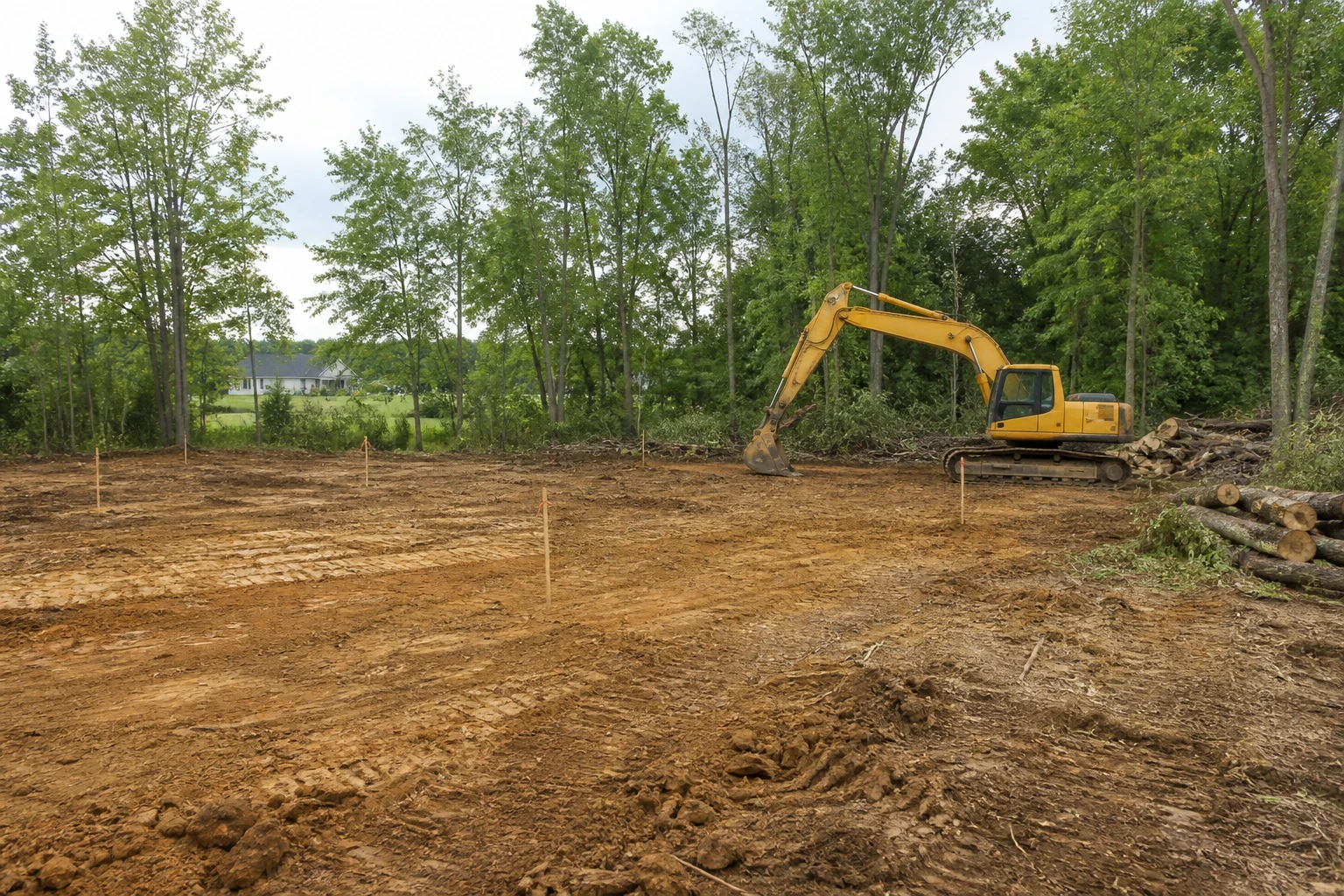
When you’re clearing space for a new home, barn, shop, driveway, or another planned project, we start with what needs to happen on the property afterward. The intended structure or access route helps define what we need to open, what should stay, and whether clearing is the whole job or only the first phase. We won’t guess at a future layout, and we don’t want you expecting clearing by itself to leave a construction-ready surface. Those are different outcomes, so we’ll talk through the difference before we put the scope together.
Bring whatever site information you already have to that first conversation. We’ll want to understand the planned use, approximate work area, desired access, known boundaries, and any details you have from a builder, surveyor, or other project professional. From there, we can discuss whether the work calls for forestry mulching, conventional clearing, grading and sitework, drainage, excavation, tree services, or a sequence that uses several of those services. The point isn’t to add work you don’t need. It’s to make sure the clearing phase lines up with the project you actually have planned.
An open-looking lot may still need more preparation before the next phase can begin. Clearing removes or processes selected vegetation. Grading shapes the ground. Drainage work deals with how water moves through the agreed area, and excavation may cover other site needs. We offer each of those service categories, but we’ll list them clearly in the estimate instead of wrapping everything into vague language. If grading, drainage, excavation, or tree work isn’t included, we want that boundary to be easy to understand.
Our written scope should cover the work boundary, access route, material-handling plan, requested finish, and any follow-up phase included in the price. We’ll also identify what you need to handle before we arrive, including marking private utilities, septic components, boundaries, and anything that must be protected. If another contractor is taking over after clearing, tell us what that contractor needs at handoff. Sorting that out before work starts gives both phases a better chance to support each other instead of creating extra work or confusion later.
Homesite-clearing prices are specific to the property. For local work, we commonly use a six- to eight-hour minimum in the $1,800 to $2,500 range and a 50% deposit. That range is useful for early planning, but it isn’t a fixed quote for every lot. Access, terrain, vegetation density, travel, material handling, the size of the work area, and the finish you want can all change the actual price. That’s why we need to look at the site and prepare an estimate around the real conditions.
When you compare proposals, look at the scope along with the price. Ask which clearing method is planned, what material will stay or be moved, whether stump work or grading is included, and what the area should look like at handoff. Our accepted written estimate and any project-specific agreement take priority over general information online. You should be able to see what you’re approving without having to fill in the gaps yourself.
If another contractor follows us, ask what information or site condition that contractor needs at handoff. The clearing area, access route, retained trees, material placement, and timing can all affect later grading or construction. We can scope the clearing, grading, drainage, excavation, tree work, and other services we offer, but we don’t replace the appropriate professionals for surveying, engineering, permitting, utility installation, or construction. Those responsibilities need to stay with the people handling those parts of the project.
Before we schedule the work, make sure you’ve resolved the information needed to mark the site correctly. A proposed building area shown casually on a phone screen isn’t a substitute for reliable site information. We’ll use the written scope to identify exactly what we’re clearing or preparing, without promising that the lot will be ready for every possible later use.
A useful handoff is specific. It might say that we completed the listed clearing within the marked area, or that we also completed the agreed grading, drainage, excavation, or tree work under the accepted project terms. That level of detail helps you, us, and the next contractor work from the same expectations. It also keeps a homesite or lot-clearing project focused on the result you need now without blurring the line between our phase and the work that comes after it.
Yes. We clear for homes, barns, shops, driveways, and other planned uses. Whether the project is a fit—and what belongs in the scope—depends on the property and the phase you have planned next.
Not automatically. We offer grading and sitework, but we’ll only include grading when it’s clearly listed in your estimate.
No. Lot-clearing prices are site-specific, so we build the estimate around access, terrain, vegetation, travel, material handling, the work area, and the finish you want.
Call (513) 993-6088 with the location, current conditions, access, approximate work area, and intended use.
Request an Estimate