Forestry Mulching
Turn brush, saplings, and unwanted vegetation into mulch that stays on the ground.
We shape each defined work area around what you need it to support, whether that’s access, drainage, construction, or another future use.
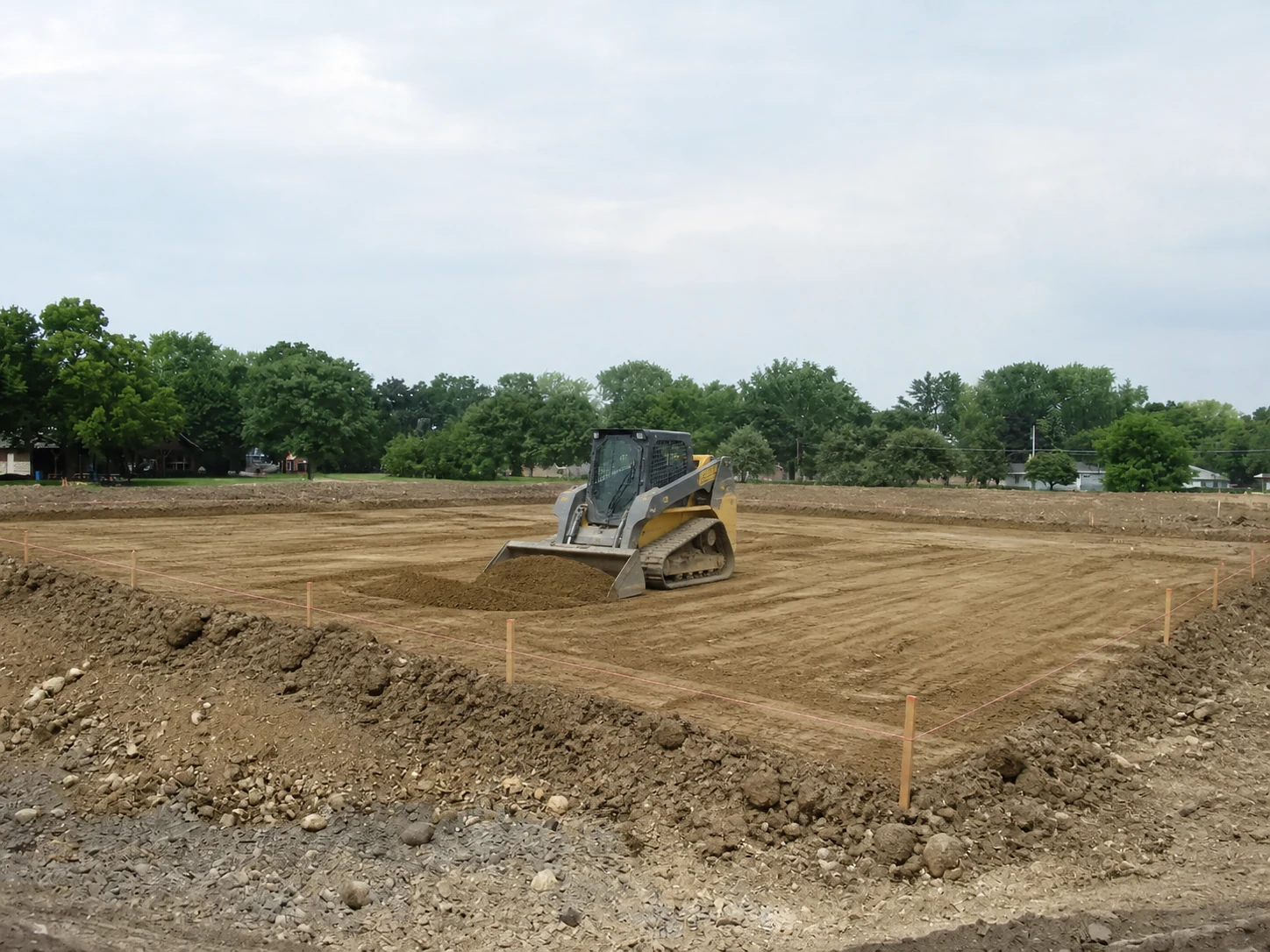
We start with the purpose of the grading. You may need better access, a shaped work area, preparation for construction, or support for a defined drainage plan. Those aren’t the same job, so we review the property, how you plan to use the area, and the handoff you expect before we describe the work. That keeps the conversation focused on what the ground needs to do when this phase is finished.
Tell us the property location, what the area is like now, where we can get in, and which part needs attention. We’ll also need to know the boundaries you’re aware of, any nearby structures, and whether clearing comes first or another contractor follows us. The grading scope should work with that sequence. We’ll define the part we’re handling without promising work that belongs to a different contractor or project professional.
Clearing removes or processes selected vegetation. Grading shapes the ground inside the agreed work area. Sitework can include related excavation, drainage, access, or other property-preparation tasks. We offer all three categories, but we don’t roll them together under one vague label. Your estimate should name each phase that’s actually included so you can see where one part ends and the next begins.
Existing conditions matter. Vegetation, stumps, loose organic material, hidden debris, soft areas, and restricted access can all affect how the grading moves forward. Show us anything that needs to stay, and let us know about known private utilities, septic components, buried lines, or earlier drainage work. With that information, we can set a clearer sequence and explain both the condition we’re starting with and the condition this grading phase is expected to leave behind.
Words like smooth, level, ready, or drained can mean different things from one property to the next. Before pricing, we need to spell out the work area, the shaping we’re proposing, the access that has to remain, material expectations, exclusions, your responsibilities, and the expected handoff. If the project calls for elevations, engineering, permits, imported material, or third-party approvals, we’ll need to confirm who is responsible before scheduling.
Our pricing is site-specific. Access, terrain, the size of the work area, travel, equipment time, material needs, and the finish you want can all change the estimate. For local work, we commonly use a six- to eight-hour minimum in the $1,800 to $2,500 range and a 50% deposit. That’s planning information, not a blanket price. The written proposal you accept controls the actual scope and price for your project.
If the grading supports a driveway, building area, construction access, or another planned use, share whatever project information you have before we begin. We can scope the grading we propose, but we don’t replace surveying, engineering, permitting, utility installation, or construction services. Those responsibilities stay with the appropriate project professionals.
Before you approve the work, we’ll confirm the boundary, access route, protected features, included material movement, payment timing, and expected handoff. If a changed condition affects scope, price, or schedule, we’ll document that change before extra work moves forward whenever practical. That way, this phase stays tied to the result we agreed to provide.
It also helps to separate the immediate need from ideas you may have for later. Mark the area that matters now, tell us how water or access currently behaves, and explain what the finished phase needs to support. Recent photos and a marked map can help with the first conversation. They don’t replace accurate boundaries or your disclosure of known private utilities and septic components.
If you think imported material or material removal may be needed, bring that up so we can state the expectation instead of assuming it. We’ll also confirm whether clearing, stump work, drainage, excavation, or restoration sits outside the grading price. A detailed written scope gives you a fairer way to compare proposals and gives the next contractor a clearer starting point.
We can grade a defined work area to support access, drainage, construction, or future property use. The scope starts with the result you need and the finish we agree on.
No. We offer both services, but your written estimate will say whether grading after clearing is included in the project.
We build the estimate around access, terrain, work-area size, travel, equipment time, material needs, project sequence, and the finish you want.
Call (513) 993-6088 with the location, current conditions, access, approximate work area, and intended use.
Request an Estimate